Sumer
- c. 5500 – c. 1800 BC
- Created cuneiform writing: a way of recording land sales, negotiations, treaties and even, later, marketing for the emperor or sovereign
Summary
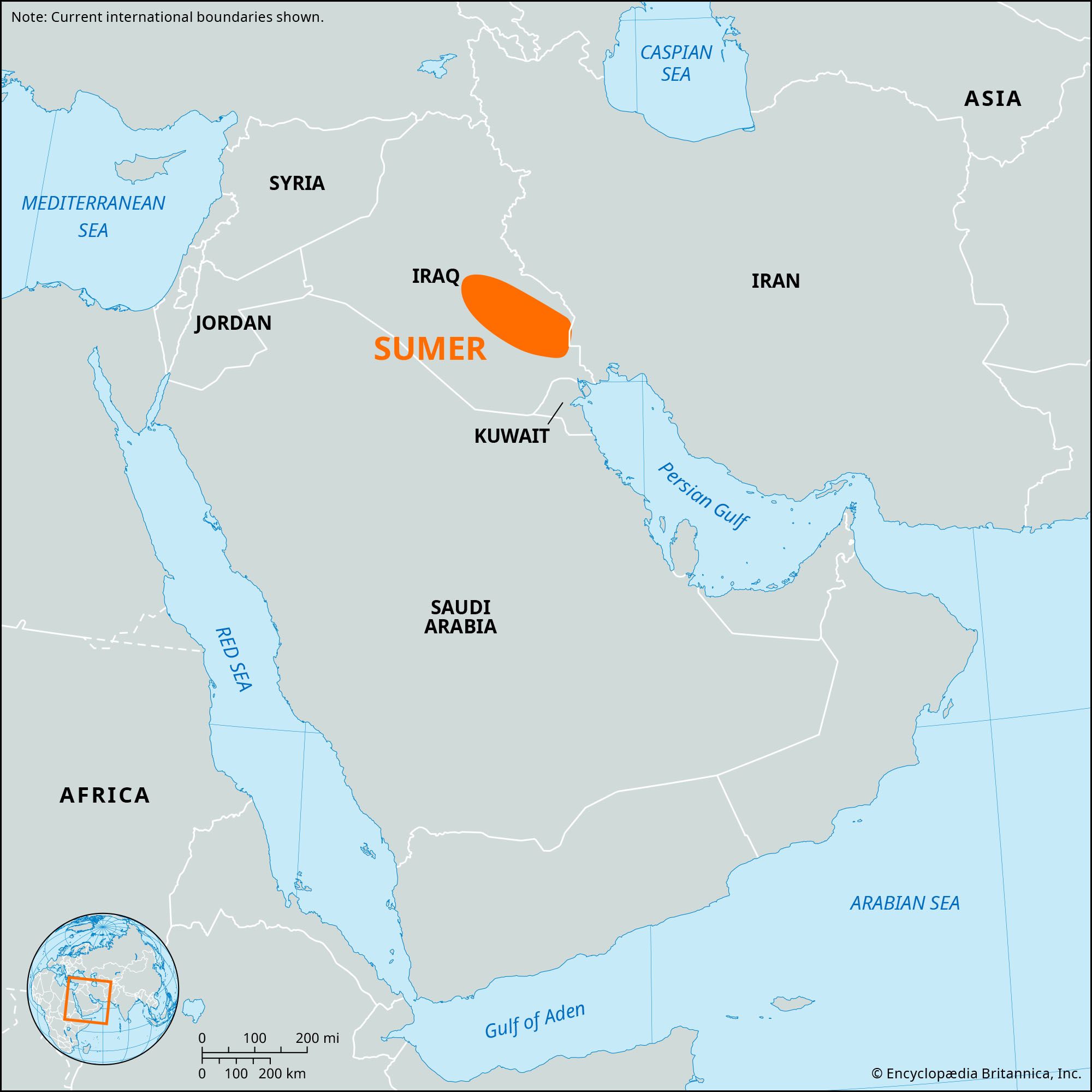
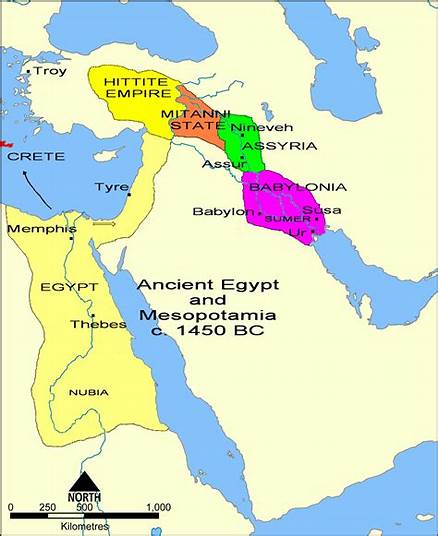
Sumer is the earliest known civilization, located in the historical region of southern Mesopotamia (now south-central Iraq), emerging during the Chalcolithic and early Bronze Ages between the sixth and fifth millennium BC. Like nearby Elam, it is one of the cradles of civilization, along with Egypt, the Indus Valley, the Erligang culture of the Yellow River valley, Caral-Supe, and Mesoamerica. Living along the valleys of the Tigris and Euphrates rivers, Sumerian farmers grew an abundance of grain and other crops, a surplus which enabled them to form urban settlements. The world’s earliest known texts come from the Sumerian cities of Uruk and Jemdet Nasr, and date to between c. 3350 – c. 2500 BC, following a period of proto-writing c. 4000 – c. 2500 BC.
Ending
Fall of Sumer is generally taken to coincide with a major shift in population from southern Mesopotamia toward the north. Ecologically, the agricultural productivity of the Sumerian lands was being compromised as a result of rising salinity. Soil salinity in this region had been long recognized as a major problem. Poorly drained irrigated soils, in an arid climate with high levels of evaporation, led to the buildup of dissolved salts in the soil, eventually reducing agricultural yields severely.
During the Akkadian and Ur III phases, there was a shift from the cultivation of wheat to the more salt-tolerant barley, but this was insufficient, and during the period from 2100 BC to 1700 BC, it is estimated that the population in this area declined by nearly three-fifths. This greatly upset the balance of power within the region, weakening the areas where Sumerian was spoken, and comparatively strengthening those where Akkadian was the major language. Henceforth, Sumerian remained only a literary and liturgical language, similar to the position occupied by Latin in medieval Europe.
Following an Elamite invasion and sack of Ur during the rule of Ibbi-Sin (c. 2028–2004 BC), Sumer came under Amorite rule (taken to introduce the Middle Bronze Age). The independent Amorite states of the 20th to 18th centuries are summarized as the “Dynasty of Isin” in the Sumerian king list, ending with the rise of Babylonia under Hammurabi c. 1800 BC.